
Health Service Executive
Starting with families and frontline workers to transform delivery of care
Starting with families and frontline workers to transform delivery of care
Starting with families and frontline workers to transform delivery of care
Our Focus
Design Research
Design Research
Service Design
Service Design
Content Strategy
Content Strategy
Improving access to care for Ireland’s youngest patients
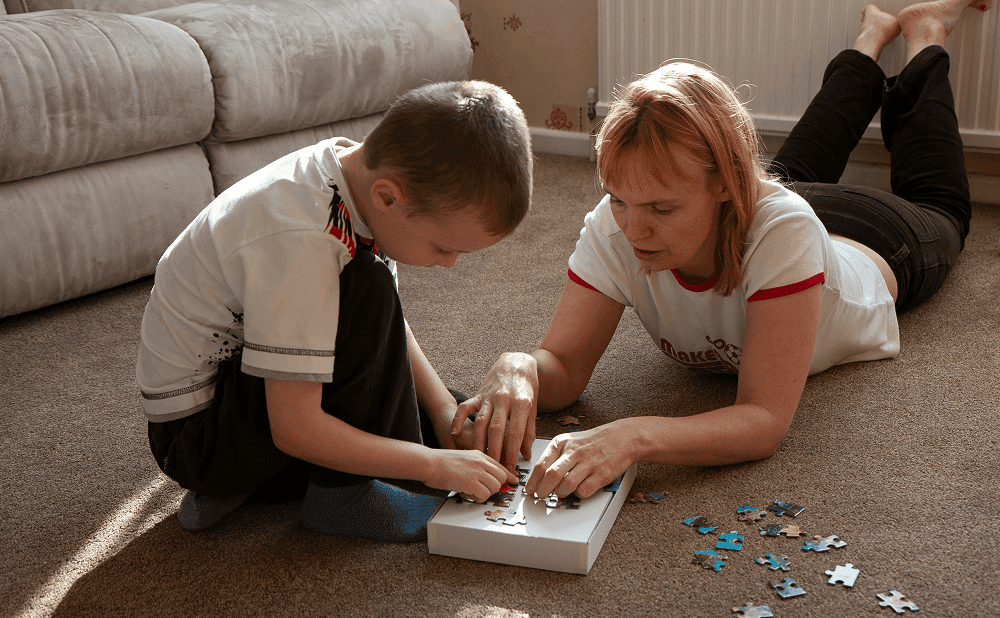
Children’s services in Ireland are under pressure. Families can wait months, sometimes years, for autism diagnoses. Frontline teams are often exhausted. Service providers work in silos, and trust can be low. CHO8, one of Ireland’s nine community healthcare organisations, came to Big Motive because they needed a new approach to addressing complex challenges.

A co-design approach aligned around stakeholder needs
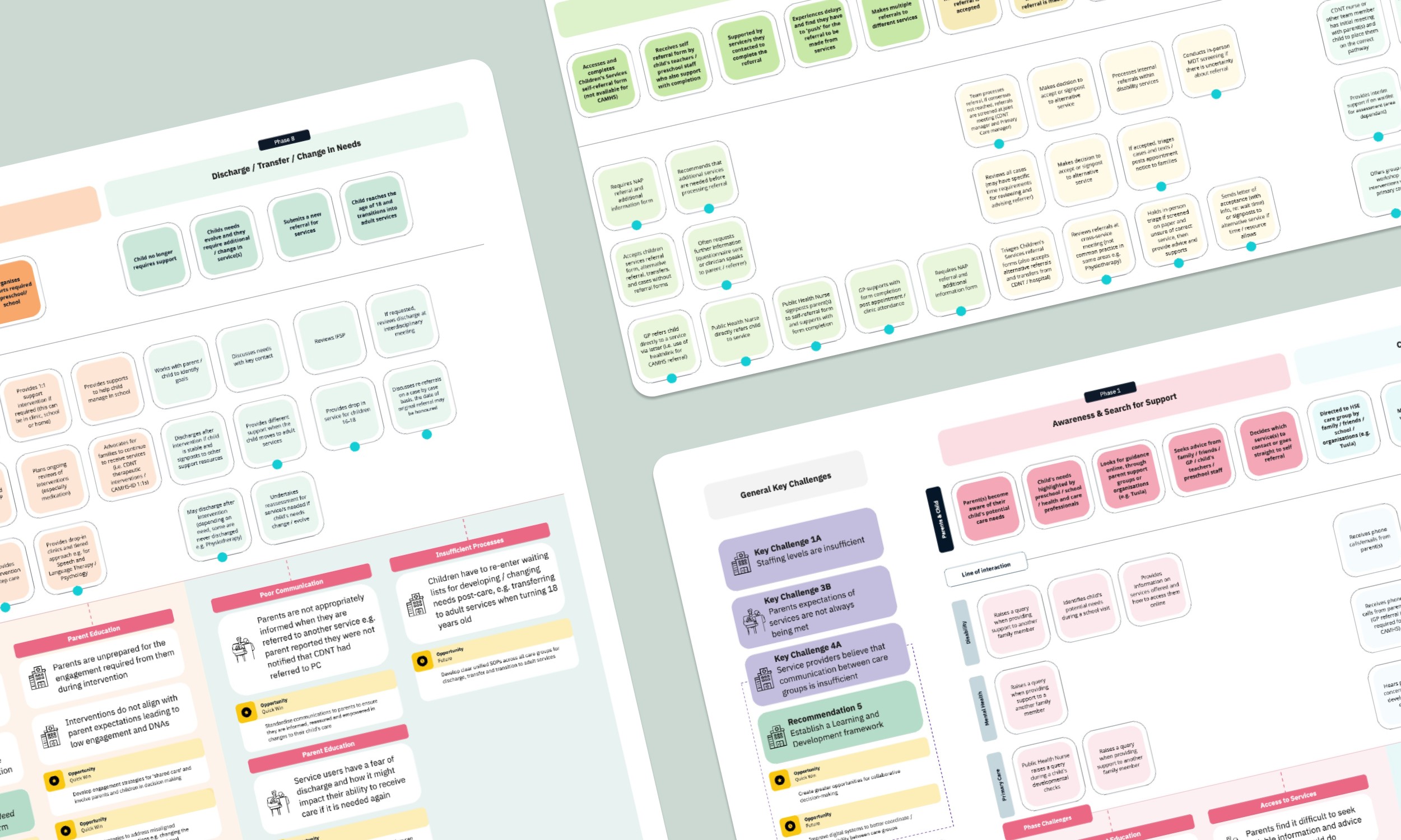
With strong leadership, champions for change, a design-led approach took shape, centred on understanding stakeholders, from families to front line workers and care providers, and prototyping solutions with real people delivering and using the services. Over a 10-week discovery phase, we mapped journeys across mental health, primary care, and disability services, uncovering six key opportunities for reform.
Prototyping for impact
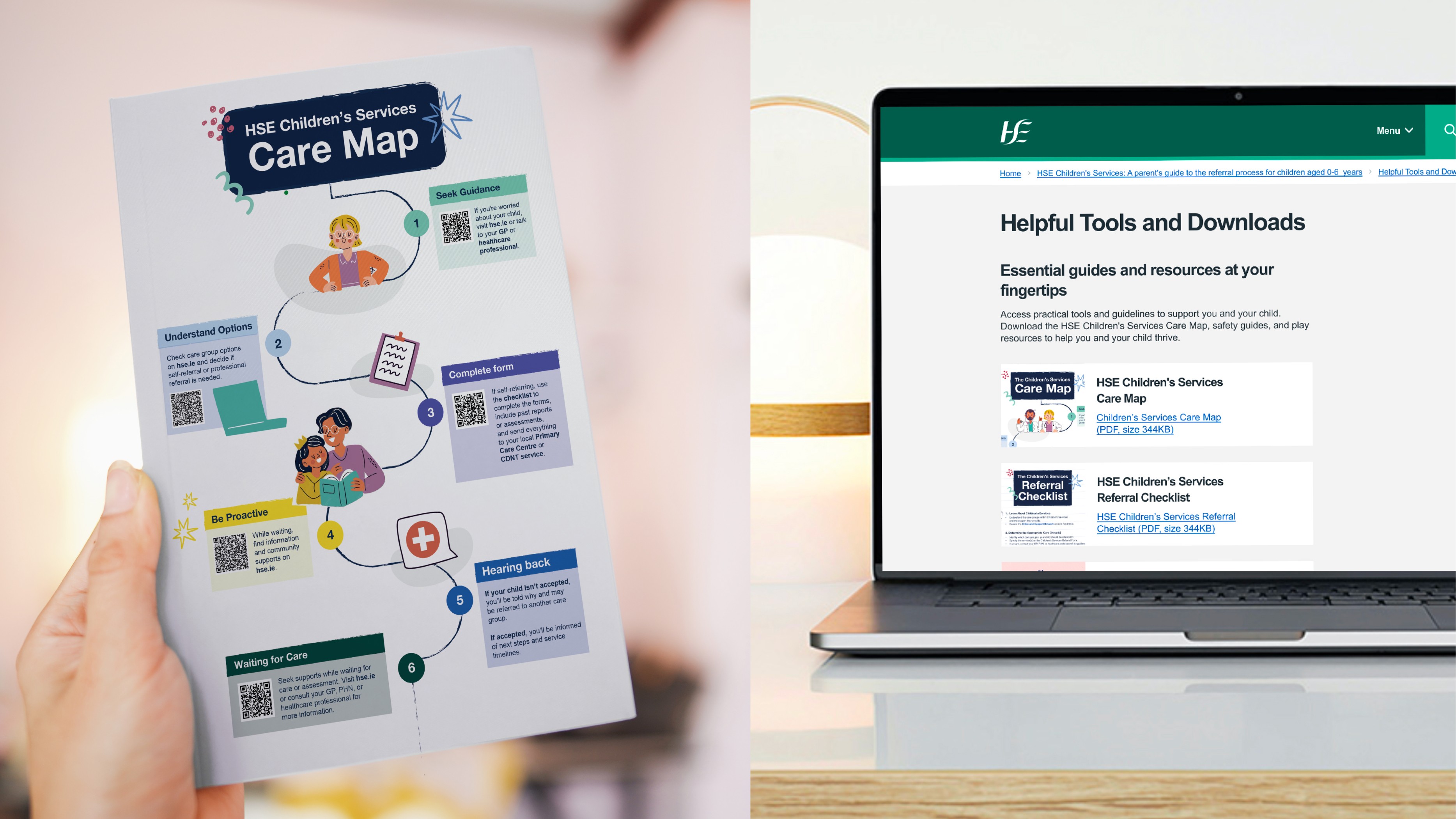
In the 12-week implementation phase, we co-designed, prototyped, and tested three solutions, using rapid prototypes to validate ideas with families and staff: a central review team that cut referral times from 10 weeks to 10 days, a parent handbook to build clarity and confidence, and an in-reach team to streamline autism and ADHD diagnoses.
From local impact to national reform
Now being explored nationally, these solutions demonstrate how design methods can bring clarity to complex system challenges, align stakeholders, and de-risk new approaches. The result is faster access, stronger collaboration, and a more joined-up future for children’s healthcare.
Improving access to care for Ireland’s youngest patients
Children’s services in Ireland are under pressure. Families can wait months, sometimes years, for autism diagnoses. Frontline teams are often exhausted. Service providers work in silos, and trust can be low. CHO8, one of Ireland’s nine community healthcare organisations, came to Big Motive because they needed a new approach to addressing complex challenges.
A co-design approach aligned around stakeholder needs
With strong leadership, champions for change, a design-led approach took shape, centred on understanding stakeholders, from families to front line workers and care providers, and prototyping solutions with real people delivering and using the services. Over a 10-week discovery phase, we mapped journeys across mental health, primary care, and disability services, uncovering six key opportunities for reform.
Prototyping for impact
In the 12-week implementation phase, we co-designed, prototyped, and tested three solutions, using rapid prototypes to validate ideas with families and staff: a central review team that cut referral times from 10 weeks to 10 days, a parent handbook to build clarity and confidence, and an in-reach team to streamline autism and ADHD diagnoses.
From local impact to national reform
Now being explored nationally, these solutions demonstrate how design methods can bring clarity to complex system challenges, align stakeholders, and de-risk new approaches. The result is faster access, stronger collaboration, and a more joined-up future for children’s healthcare.
Improving access to care for Ireland’s youngest patients
Children’s services in Ireland are under pressure. Families can wait months, sometimes years, for autism diagnoses. Frontline teams are often exhausted. Service providers work in silos, and trust can be low. CHO8, one of Ireland’s nine community healthcare organisations, came to Big Motive because they needed a new approach to addressing complex challenges.
A co-design approach aligned around stakeholder needs
With strong leadership, champions for change, a design-led approach took shape, centred on understanding stakeholders, from families to front line workers and care providers, and prototyping solutions with real people delivering and using the services. Over a 10-week discovery phase, we mapped journeys across mental health, primary care, and disability services, uncovering six key opportunities for reform.
Prototyping for impact
In the 12-week implementation phase, we co-designed, prototyped, and tested three solutions, using rapid prototypes to validate ideas with families and staff: a central review team that cut referral times from 10 weeks to 10 days, a parent handbook to build clarity and confidence, and an in-reach team to streamline autism and ADHD diagnoses.
From local impact to national reform
Now being explored nationally, these solutions demonstrate how design methods can bring clarity to complex system challenges, align stakeholders, and de-risk new approaches. The result is faster access, stronger collaboration, and a more joined-up future for children’s healthcare.

Make the future real.
Big or small, every idea starts with a conversation.
